No Hot Water This Morning? 5 Things to Check Before You Call a Plumber in North Vancouver
If you have no hot water in your North Vancouver home, check five things before calling: the breaker or gas supply, the pilot or ignition, the thermostat setting, the age of the tank, and whether the tank itself is leaking. Two of those five you can often fix yourself in under ten minutes. Contact The Good Plumber if you have worked through the list below and still have no hot water.
One exception overrides all of this. If you smell gas anywhere near the unit, stop, leave the building, and call the gas utility’s emergency line from outside.
5 Things to Check Before You Call a Plumber in North Vancouver
1. Has the Breaker Tripped or the Gas Supply Been Interrupted?
The first thing to check with no hot water is the power or gas feeding the unit. On an electric tank, find the double-pole breaker labelled for the water heater in your panel, and look for one that has moved slightly out of line with the others. Switch it fully off, then back on.
If it trips again straight away, stop there. A repeatedly tripping breaker usually means a failed heating element or a short, and that needs a licensed trade rather than another reset.
On a gas unit, confirm the gas shutoff valve at the unit is in line with the pipe rather than across it, and check whether other gas appliances in the home are working. If nothing gas-fired is running, the issue is upstream of your water heater.
2. Is the Pilot Light Out or the Ignition Failing?
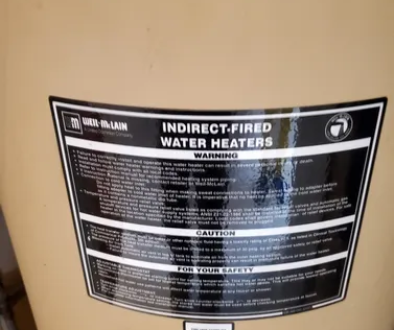
On an older gas tank with a standing pilot, a pilot that has gone out is one of the most common causes of no hot water. Most units have relighting instructions printed on a label on the tank itself, and following that label is the only safe way to do it.
If the pilot lights and then goes out again within a minute or two, the thermocouple is usually failing. That is an inexpensive part and a straightforward service call, not a reason to replace the tank.
Newer gas units use electronic ignition instead and will show a fault code or a flashing status light rather than a pilot flame. Write the code down before you call, because it saves diagnostic time on site.
Book a water heater service visit if the pilot will not stay lit or a fault code keeps returning.
3. Is the Thermostat Set Correctly, or Has the Household Simply Outgrown the Tank?
Check the thermostat on the tank before assuming failure. A setting that has drifted, or been turned down by someone in the house, produces lukewarm water rather than none at all.
Lukewarm is a useful clue. Complete loss of hot water usually points at ignition, power, or a failed element. Water that starts hot and runs cold in five minutes usually points at capacity, sediment buildup, or a failed lower element.
Households change faster than water heaters do. A 40-gallon tank sized for two people in 2016 struggles with four people and a suite in 2026, and no repair fixes an undersized tank. If capacity is the real problem, it is worth reading what separates a correct tankless water heater installation from a rushed one before you commit to a replacement.
4. How Old Is the Tank?
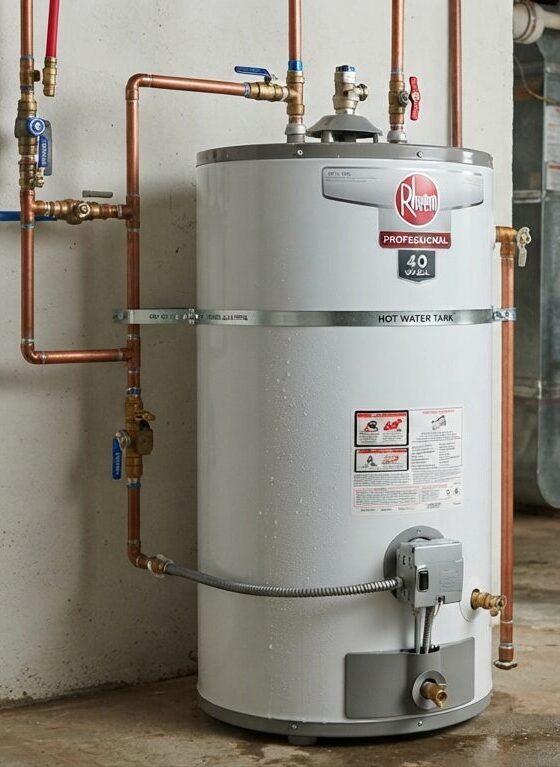
Tank age is the single most useful piece of information in this whole checklist. Rheem puts the typical life of a traditional tank water heater at 8 to 12 years, with tankless units commonly reaching 15 to 20 years or more.
The manufacture date is usually encoded in the serial number on the rating plate, and most manufacturers publish a simple guide to reading it. If yours is past ten years and has now failed, repair is often money spent on a unit that will fail again within the year.
North Shore water is relatively soft compared with much of Canada, which helps, but sediment still accumulates and the tank bottom still takes thermal stress every cycle. A rumbling or popping noise during heating is sediment, and it is a reliable sign the tank is in its final stretch.
5. Is the Tank Itself Leaking?
Look at the floor around the base of the tank. Water pooling there means one of two things: a fitting or the temperature and pressure relief valve is leaking, which is repairable, or the tank body has corroded through, which is not.
A tank that has rusted through cannot be patched. The steel is gone, and the only outcome is replacement, ideally before it opens up completely while nobody is home.
When Should You Stop Checking and Call a Plumber in North Vancouver?

Call The Good Plumber if any of the following are true:
- You smell gas at any point. Leave first, call the utility from outside.
- The breaker trips again immediately after resetting.
- The pilot will not stay lit, or a fault code keeps returning.
- Water is pooling around the base of the tank.
- The unit is over ten years old and has stopped producing hot water.
- There is no hot water anywhere in the house and the unit appears to be running normally.
Jamie Pender, owner of The Good Plumber, has spent more than 20 years in plumbing including the water heater services across North Vancouver, West Vancouver, and Burnaby. Contact us now if you need help with repair or water heater installations.
Blog by The Good Plumber, North Vancouver. More than 20 years of hands-on plumbing experience. BBB A+ accredited since July 2024. Last updated September 2026.
The Good Plumber provides water heater services, emergency and general plumbing, drainage solutions, repiping, and renovation plumbing across North Vancouver, West Vancouver, Burnaby, and the Lower Mainland. Rated 4.9/5 on Google and 5/5 on HomeStars.
Frequently Asked Questions
Why did my hot water run out faster than usual?
Hot water that runs out early usually means sediment buildup reducing effective tank capacity, a failed lower heating element on an electric unit, or simply more demand than the tank was sized for. A tank that has never been flushed is the most common version of this.
Can I relight a gas water heater pilot myself?
Yes, if the unit has a standing pilot and you follow the relighting instructions printed on the tank. If it will not stay lit, or you smell gas at any point, stop and call for help instead of repeating the attempt.
How long does a hot water tank last?
Rheem puts a traditional tank water heater at 8 to 12 years, and tankless units at 15 to 20 years or more with proper maintenance. Installation quality, water conditions, and whether the tank has been flushed all move that range.
Should I repair or replace a water heater that is over ten years old?
Replacement is usually the better value past the ten-year mark, because a repair on an ageing tank buys time on a unit already near the end of its design life. Under eight years, most single-component failures are worth repairing.
Does The Good Plumber install tankless water heaters?
Yes. The Good Plumber installs both tank and tankless water heaters across North Vancouver and the surrounding areas, and installations carry a one-year warranty on parts and labour.